
Long Beach Guide to Retaining Walls: What to Know Before You Build- Materials, Drainage, Permits
Why Long Beach Retaining Walls Need Proper Engineering & Drainages
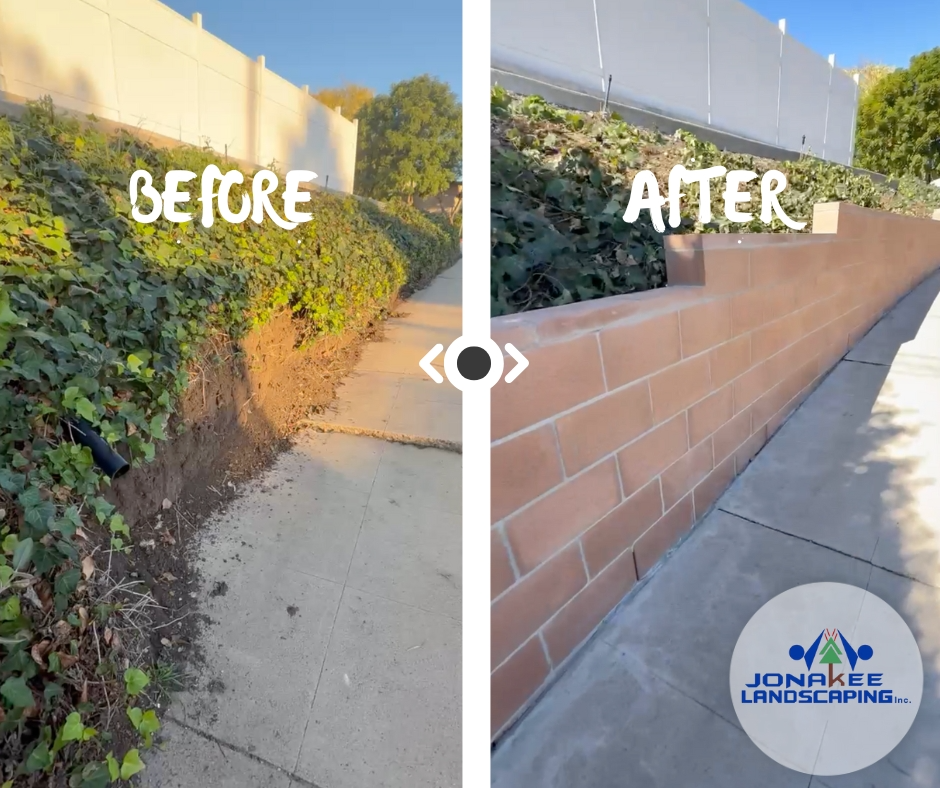
Building a retaining wall in Long Beach isn’t the same as inland areas. Between coastal moisture, clay-heavy soils, historic lot conditions, and tight property lines, your wall needs proper engineering, drainage, and materials — not just stacked blocks.
Homeowners in Belmont Shore, Naples, Bixby Knolls, California Heights, Wrigley, and East Long Beach install retaining walls to:
Level sloped yards
Create usable patios
Support driveways and walkways
Prevent soil movement near foundations
Replace failing railroad tie or old block walls
A poorly built wall can lean, crack, or trap water — leading to expensive repairs. This guide covers everything Long Beach homeowners should know before starting a retaining wall project, including materials, permits, and proper construction techniques.
1. Long Beach Soil & Drainage: Key to Long-Lasting Retaining Walls
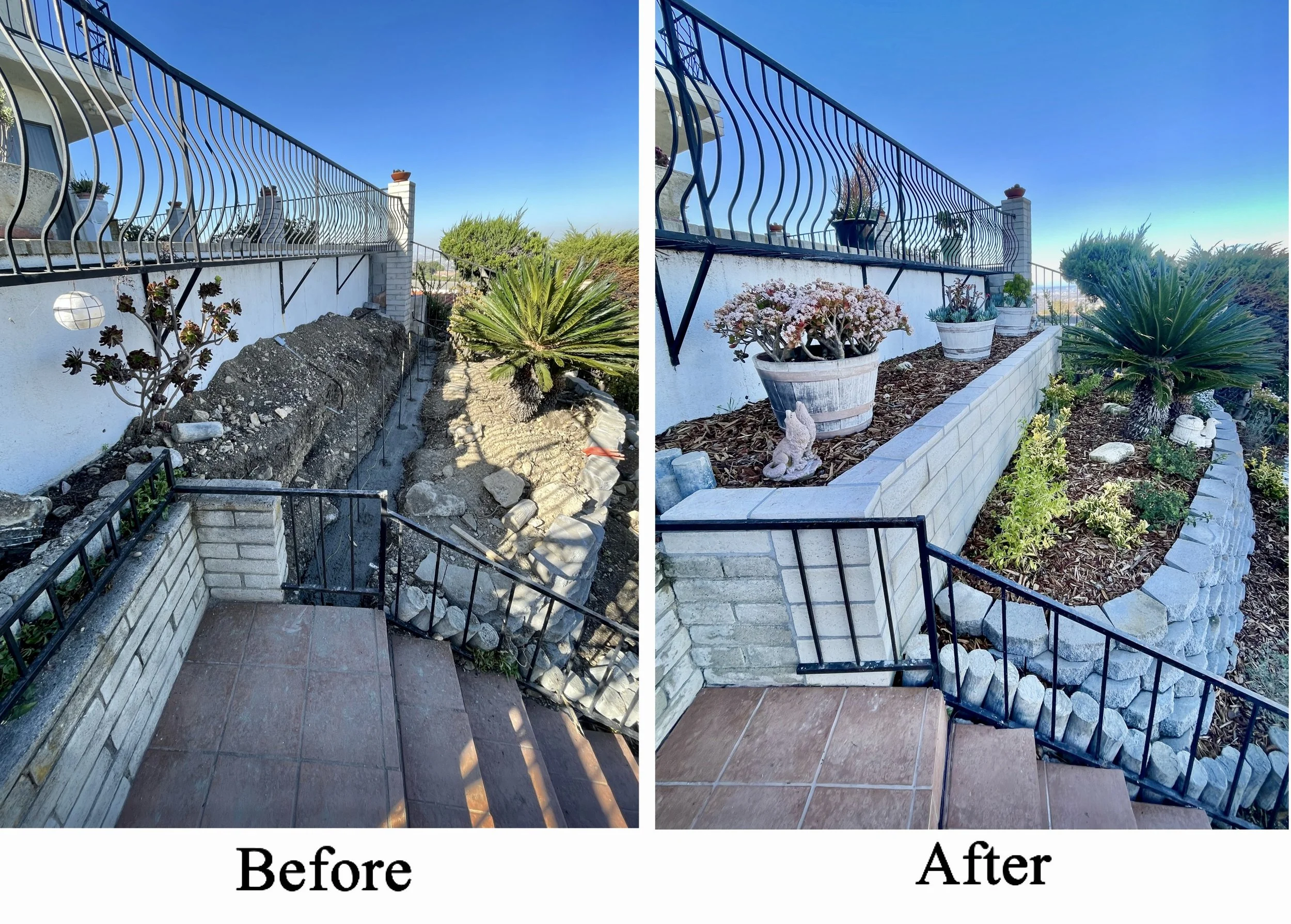
Much of Long Beach has:
clay-based soils that expand and contract
areas with high groundwater
coastal moisture and salt air
older fill soil in historic neighborhoods
Without proper drainage, base preparation, and materials, even a new wall can fail within a few years. Properly installed walls use compacted base material, gravel backfill, perforated drains, weep holes, and grading that directs water away from structures.
This is especially important in neighborhoods like Naples and Belmont Shore, where water tables are higher and lots sit close to canals and the ocean.
2. Do You Need a Permit for a Retaining Wall in Long Beach?
Yes. Many Long Beach retaining walls require permits before construction. You’ll need a permit if the wall:
Exceeds 3–4 feet in height
Supports a driveway, structure, or hillside load
Is near a property line
Involves significant grading
Skipping permits can lead to fines, stop-work orders, or complications when selling your home. A professional Long Beach retaining wall contractor can help ensure compliance with city codes.
3. Best Retaining Wall Materials for Long Beach Homes
Choosing the right material depends on your property, soil type, slope, and design goals.
Concrete Block Walls / Cinder Block Walls (CMU)
Most common for durability and strength. Ideal for structural walls and modern finishes.
Natural Stone Walls
Great for Belmont Shore and California Heights homes with classic architecture.
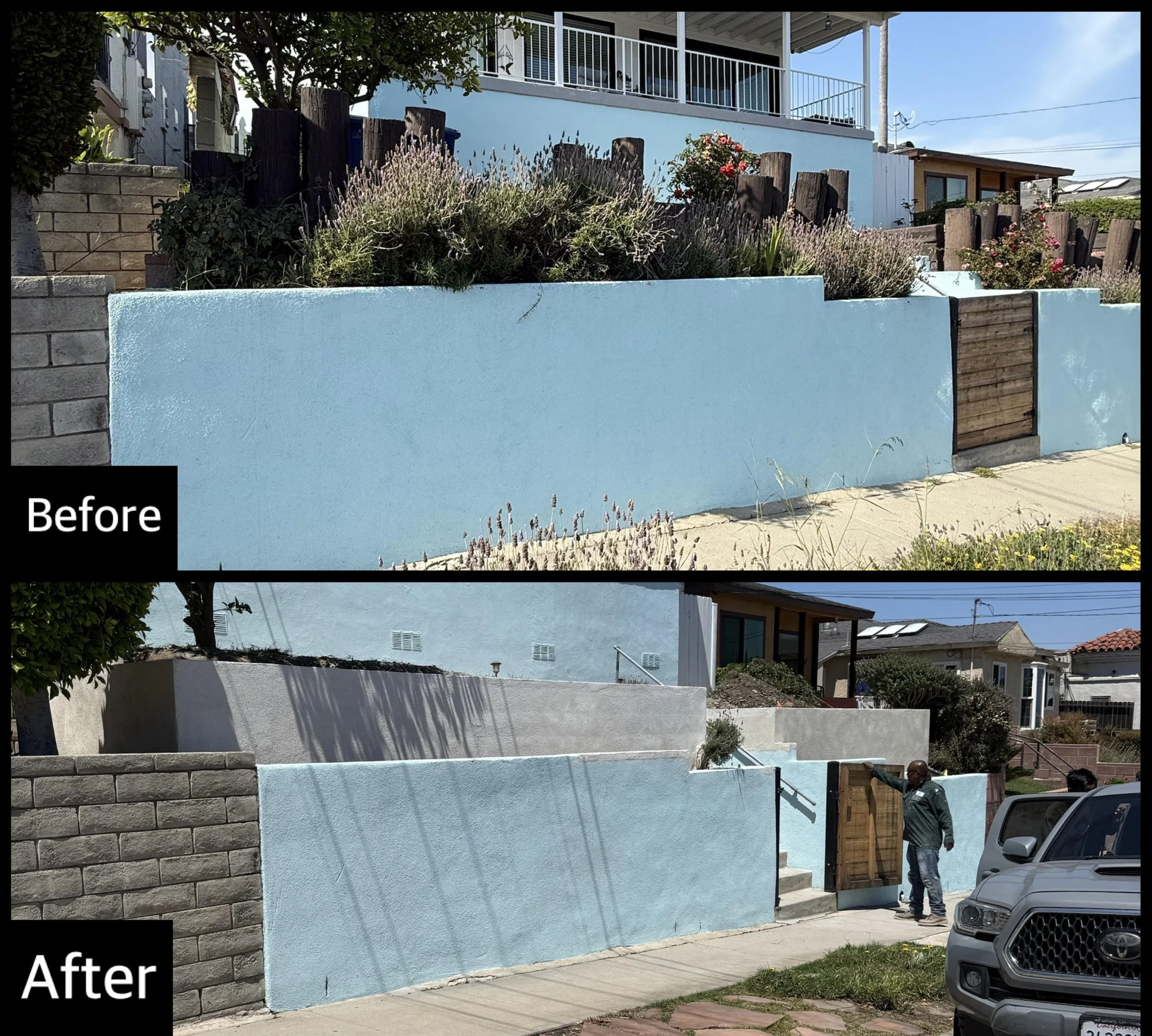
Stucco-Finished Walls
Blend well with Spanish and coastal-style properties throughout Long Beach.
Segmental Block Systems
Engineered interlocking blocks that allow movement without cracking — excellent for clay soil.
4. Replacing Old or Failing Retaining Walls in Long Beach
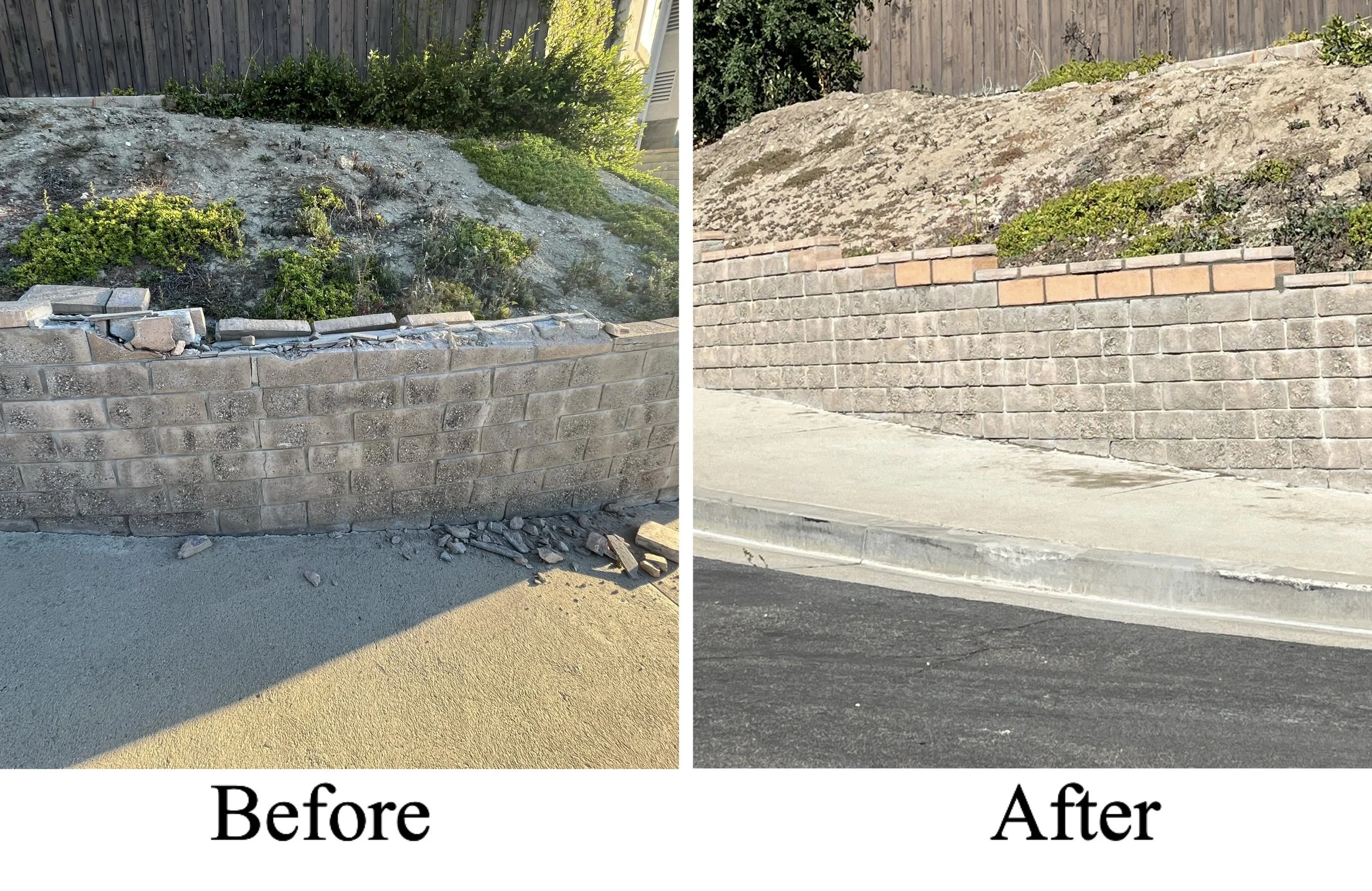
Many older Long Beach homes still have railroad tie walls, unreinforced block walls, or crumbling concrete. Signs your wall may need replacement include leaning, cracks, water pooling, or soil washing out.
5. Planning Your Long Beach Retaining Wall Correctly (avoid mistakes!)
Every property is different. Here’s what a proper retaining wall plan should include:
Soil conditions & slope
Drainage paths & runoff
Proximity to foundations & driveways
Property lines & access
Height & structural requirements
Long-term wall use
Skipping proper compaction, drainage, or reinforced footing often leads to walls failing in just a few years.
Determining the right materials, base preparation, and drainage system — determines whether a wall lasts 5 years or 30.
Work With a Local Long Beach Retaining Wall Contractor
Jonakee Landscaping builds retaining walls designed for Long Beach conditions — with proper drainage, reinforced bases, and finishes that match your home. We help with design, materials, permits, and full installation.
FAQs:
Do retaining walls require permits in Long Beach?
Yes. Walls over 3–4 feet, supporting slopes, driveways, or near property lines usually require a permit. Professional contractors can help with city approval and engineering requirements.
How long do retaining walls last?
Properly installed walls last decades with quality materials and good drainage.
What materials work best for coastal retaining walls?
Concrete block and reinforced masonry are ideal for durability. Natural stone is popular for decorative designs.
Why do retaining walls fail?
Common causes: poor drainage, lack of reinforcement, improper base preparation, or soil movement.
