
Planter Walls & Raised Planters in the South Bay
Planter walls are one of those landscape features that can completely change a yard without requiring a full redesign. They can add height to a flat landscape, create defined spaces for plants, frame a walkway or patio, or turn a sloped area into attractive planting space.
Throughout the South Bay, homeowners use planter walls, raised planters, garden walls, and built-in planting beds to add structure and greenery to both front and backyards. From natural stone planters in Palos Verdes to masonry planters incorporated into patios in San Pedro, these features can be designed around the style and layout of the property.
Jonakee Landscaping builds and repairs planter walls throughout San Pedro, Palos Verdes, Rancho Palos Verdes, Torrance, Redondo Beach, Long Beach, Lomita, and surrounding South Bay communities.
Planter Wall Ideas for South Bay Homes
There isn't one standard way a planter wall has to look. The material, height, shape, and location can all be customized around the existing landscape.
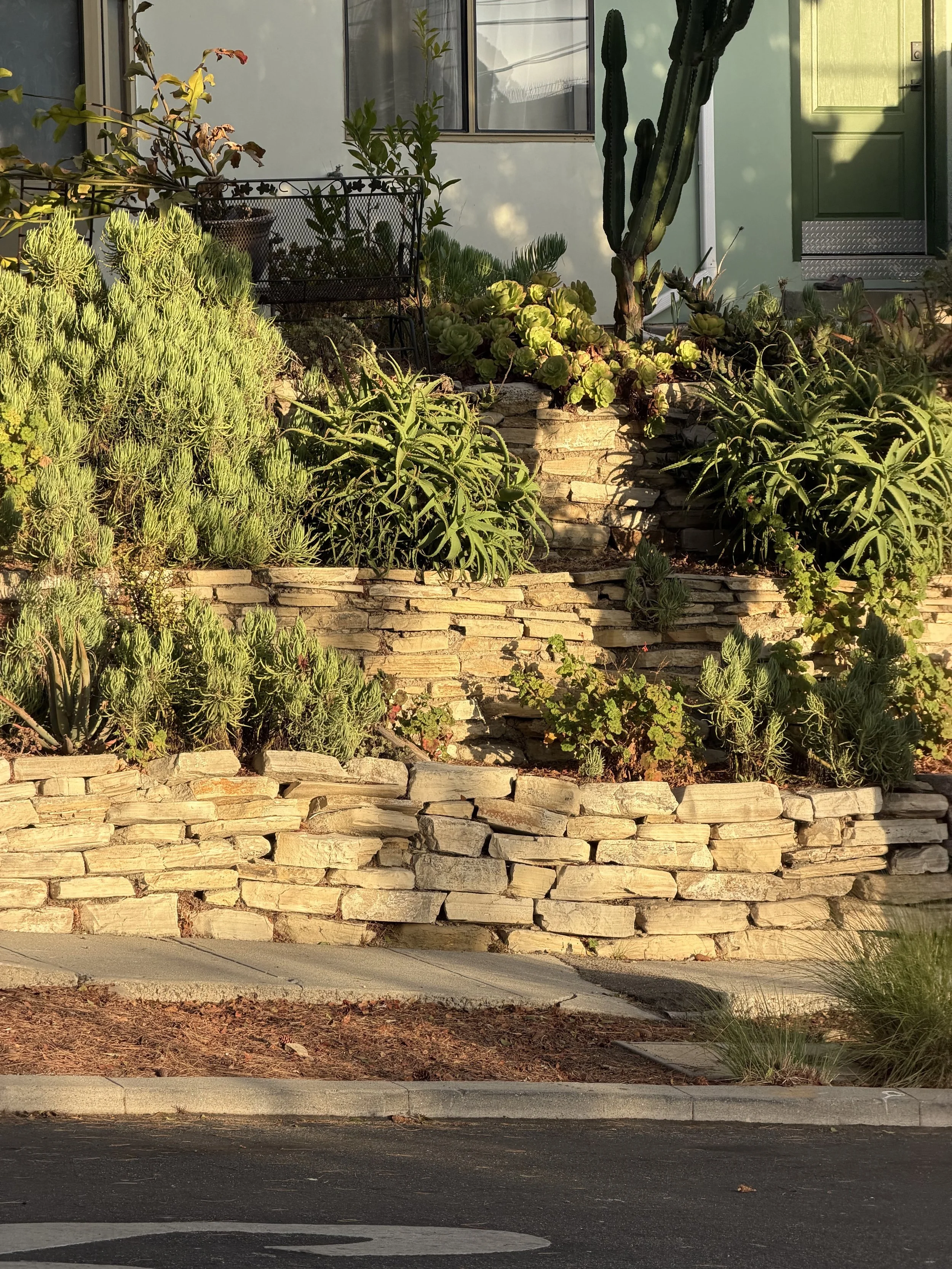
Stone planter walls can create a more natural look and pair well with succulents, California native plants, ornamental grasses, and drought-tolerant landscaping. They're especially attractive on properties with existing stonework or changes in elevation.
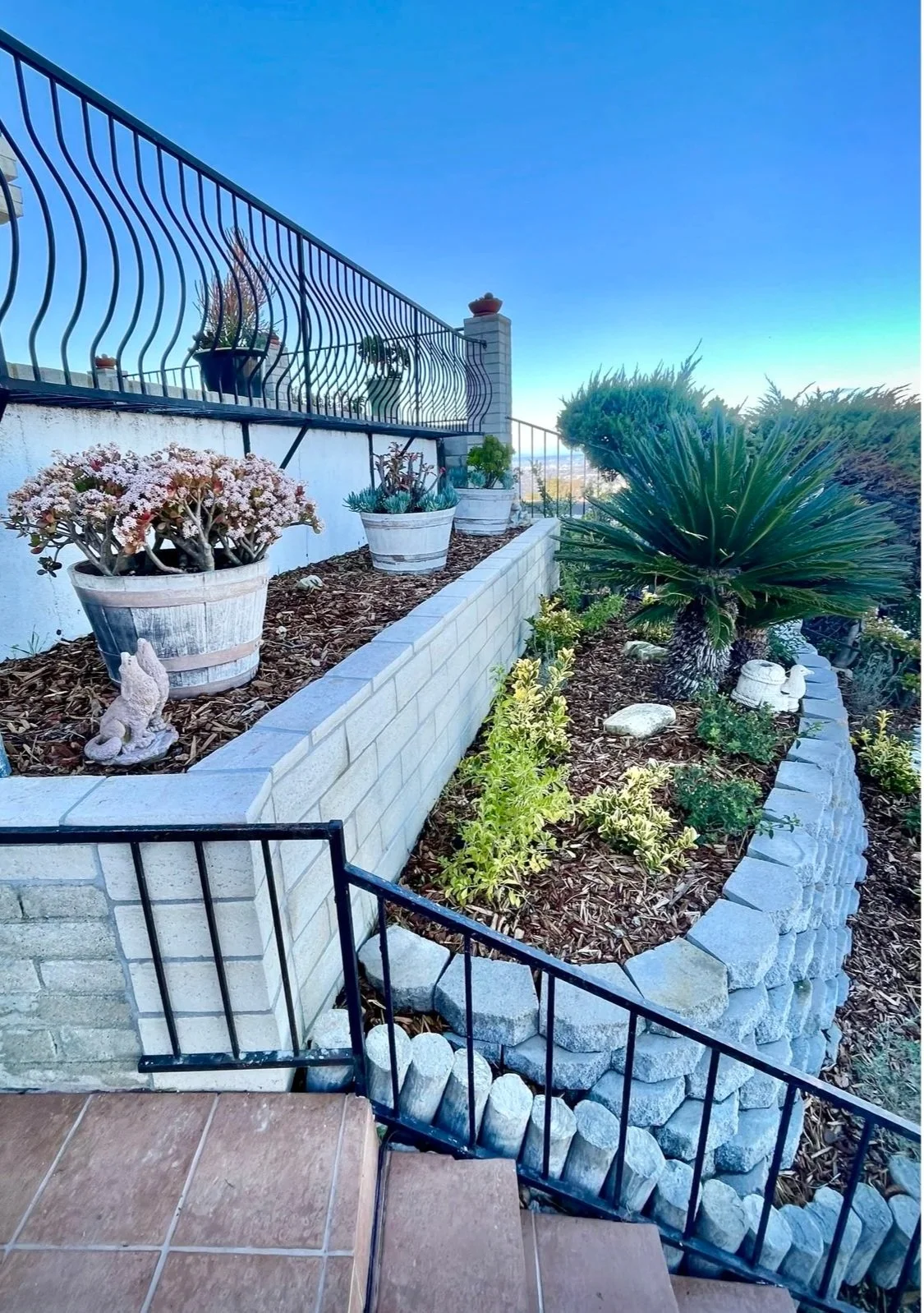
Block and masonry planters offer a more structured appearance and can complement patios, walkways, driveways, and other hardscape features.
Raised planters can also be built along the edge of a patio, beside an entryway, around an outdoor living space, or between landscaping and a driveway. In a front yard, they can add height and dimension while creating dedicated areas for flowers, shrubs, or other plants.
On properties with elevation changes, multiple planter walls can even create a layered or terraced landscape rather than one steep planting area.
Planter Walls, Raised Planters & Garden Walls: What's the Difference?
Homeowners don't always use the same name for these features.
You may hear terms such as planter wall, raised planter, garden wall, masonry planter, stone planter, block planter, planter box, or raised garden bed. While the designs can vary, these terms often describe a built-in feature that creates or surrounds an elevated planting area.
The important distinction is what the wall actually needs to do.
A decorative raised planter may simply define a garden bed. A larger wall on a sloped property may also need to retain soil, which can change how the wall needs to be constructed.
Planter Walls for Flat, Sloped & Hillside Properties
One reason planter walls work well throughout the South Bay is that they can be adapted to very different types of properties.
In Torrance, Lomita, Redondo Beach, and Long Beach, raised planters can add dimension to flatter yards, define landscaping around hardscape, or create planting areas alongside patios, walkways, and driveways.
In San Pedro, Palos Verdes, and Rancho Palos Verdes, properties can have more noticeable changes in elevation. Planter walls can be incorporated into these landscapes to create separate planting levels, make use of sloped areas, and provide a more intentional transition between elevations.
For hillside properties, stone planters can be especially attractive because they can blend into the surrounding landscape while creating space for drought-tolerant plants, shrubs, succulents, and other landscaping.
Planter Wall vs. Retaining Wall
Planter walls and retaining walls can look similar, but they don't always perform the same job.
A planter wall generally creates or defines a raised planting area. A retaining wall is designed to hold back soil where there is a more significant change in grade or elevation.
Sometimes the two functions overlap. A raised planter built into a slope may also be retaining soil, while a small garden wall on a flat property may be primarily decorative.
This distinction is especially important on sloped properties in areas such as Palos Verdes, Rancho Palos Verdes, and San Pedro. The height of the wall, surrounding grade, soil conditions, drainage, and amount of earth being retained can all affect the appropriate approach.
Planter Walls, Drainage & Heavy Rain
Water management is another important consideration when building around soil.
During heavy rain, raised planting areas can become saturated. Runoff may also travel through the landscape, particularly on properties with slopes or elevation changes. Without an appropriate path for excess water, homeowners may notice pooling, erosion, soil washing out, or stress around existing walls.
This becomes especially noticeable during Southern California's wetter periods. With El Niño and heavy winter rain bringing more attention to property drainage, homeowners can use rainy days to watch where water collects and how runoff moves through their landscaping.
If water consistently pools around a planter, washes soil away, or travels toward a wall from higher ground, the surrounding grading and drainage may need to be considered along with the planter itself.
For South Bay hillside properties, planter walls, retaining walls, drainage, and erosion control can sometimes be interconnected parts of the same landscape.
Repairing or Rebuilding an Existing Planter Wall
Not every planter needs to be built from scratch. Many South Bay homes already have older brick, block, concrete, or stone planting areas that have deteriorated over time.
Signs an existing planter wall may need attention include:
Cracking or deteriorating mortar
Loose brick, block, or stone
Sections beginning to lean
Soil washing out around the wall
Water consistently collecting nearby
Damage to caps or finishes
Visible movement or separation
Depending on the condition of the wall, it may be possible to repair damaged areas or rebuild portions of the planter.
Renovating an older planter can also be an opportunity to update the surrounding landscape with new plants, irrigation, drainage, gravel, mulch, or other improvements.
Make Planter Walls Part of the Larger Landscape
A planter wall doesn't have to be a standalone feature.
Some of the most cohesive outdoor spaces incorporate raised planting areas directly into the rest of the landscape and hardscape design.
A backyard patio can include a built-in planter filled with greenery to soften the surrounding hardscape. A front walkway can be bordered by raised plants and flowers. Stone planters can create different levels on a sloped yard, while a masonry planter can provide separation between a driveway and landscaped area.
Planter projects can also be coordinated with new planting, drip irrigation, drainage, pavers, patios, walkways, decorative gravel, mulch, and other landscape improvements.
This makes it possible to address several areas of an outdated yard at once while creating a finished space where the hardscape and landscaping work together.
Planter Wall Construction in the South Bay
Jonakee Landscaping provides planter wall construction and repair as part of landscaping and hardscaping projects throughout the South Bay.
Whether you're considering a natural stone planter, a masonry or block planter, a raised garden area, or a larger landscape renovation incorporating built-in planters, the design can be planned around the property's existing layout, plants, hardscape, and elevation.
Jonakee Landscaping serves homeowners throughout San Pedro, Palos Verdes, Rancho Palos Verdes, Torrance, Redondo Beach, Long Beach, Lomita, and surrounding South Bay areas.
Frequently Asked Questions About Planter Walls
What is another name for a planter wall?
Depending on the design, homeowners may call them raised planters, garden walls, masonry planters, stone planters, block planters, planter boxes, or raised garden beds.
What is the difference between a planter wall and a retaining wall?
A planter wall generally creates or defines a raised planting area, while a retaining wall is designed to hold back soil where there is a more significant change in grade. Some walls can serve both purposes depending on the property and design.
What materials can be used to build a planter wall?
Planter walls can be built using materials such as natural stone, concrete block, brick, masonry, and other hardscape materials. The right option depends on the desired appearance and the needs of the space.
Do planter walls need drainage?
It depends on the design, soil, irrigation, surrounding grade, and amount of soil involved. Drainage becomes particularly important when a wall retains soil or is located on a sloped property.
Can planter walls be added during a larger landscape renovation?
Yes. Raised planters can be incorporated alongside planting, patios, pavers, walkways, irrigation, drainage, gravel, mulch, and other landscaping and hardscaping features.
